SampleMonsta
by MuzikSociety
For ages it drifted through the magical rivers that run beneath the fabric of existence. Some carried heat. Some carried memory. Some carried light. Others carried things that have no name in the human world.
Century after century, current after current, it was carried somewhere ordinary: a shallow river beside a diamond mine, where the miners' children searched the banks for anything that might shine.
One afternoon a boy pulled an ugly stone from the mud. Rough. Uneven. But through one small crack, something inside it shone like sunlight. His mother told him: take it to your grandfather.
The old man had spent his life with stone. Under his lens a warm yellow light glimmered, but nothing remarkable. Still, the boy was watching him with the excitement of a first discovery. Perhaps the stone did not need to be valuable. It only needed to be his.
So he began to carve it into a keepsake.
With every strike, the light grew brighter. The stone was not reacting to the tool. It was reacting to the energy placed into it. Soon the whole workshop glowed like sunlight.
Then the stone slipped from his hands, and everything changed.
The light collapsed, and the stone began to shine again. But this time the light was black. Colors inverted. Silence fell. And the old man's shadow stood up and walked away from him, still tied to his body by a single thread.
Through it he felt both sides of himself at once: the rough, heavy vessel, and the smooth, pure thing that had always lived inside it. Only when the wind tipped a cup over the stone did the room snap back into color, and the two became one again.
He never finished shaping it. But that day he learned that reality has layers. That opposites can occupy the same place. That one truth can hide another. And that sometimes, to reveal one side of something, you have to silence the other.


Long before anyone gave it a name, the stone traveled.
It had no destination.
No owner.
No purpose that anyone understood.
For ages it drifted through the magical rivers that ran beneath the fabric of existence.
Some rivers carried heat.
Some carried memory.
Some carried light.
Others carried things that had no name in the human world.
The stone passed through all of them.
Century after century, current after current, until eventually it was carried somewhere ordinary.
A shallow river near a small mining settlement.
The settlement had grown beside a diamond mine, and the children of the miners often searched the riverbanks for things their fathers might have missed.
Fragments of crystal.
Odd stones.
Small pieces of ore.
Anything that might shine.
Anything that might be worth something.
One afternoon, a boy noticed a faint glimmer beneath the mud.
He reached into the river and pulled out an ugly stone.
It was rough.
Uneven.
Covered in dirt.
But through one small crack in its surface, something inside it shone like sunlight.
The boy's eyes widened.
He ran immediately to his mother.
She turned the stone over in her hands but couldn't tell what it was.
So she smiled and told him:
“Take it to your grandfather.”
The boy's grandfather had spent most of his life working with stone.
He knew diamonds.
He knew quartz.
He knew magical minerals brought from distant places.
And more importantly, he knew how to tell something valuable from something that merely looked valuable.
The old man placed the stone beneath his magnifying lens.
A warm yellow light glimmered from inside it.
He examined it carefully.
Then he leaned back.
Nothing remarkable.
There were stones that could glow brighter.
Crystals that could hold magical energy.
Minerals that changed color under moonlight.
Whatever this was, the old man saw no reason to believe it was valuable.
But then he looked at his grandson.
The boy was watching him with the kind of excitement that only comes with a first discovery.
So the old man smiled.
Perhaps the stone did not need to be valuable.
It only needed to be his.
He decided to shape it into a small keepsake.
Something the boy could carry.
Something that would remind him of the first stone he had ever found.
The old man secured it to his workbench and began carving.
The moment his tool touched the surface, the light inside the stone grew slightly brighter.
He stopped.
Then continued.
Another strike.
Brighter.
Another.
Brighter still.
The old man leaned closer.
The stone was reacting to him.
Not to the tool.
To the energy being placed into it.
Every cut.
Every scrape.
Every impact.
The more force he gave it, the more the stone answered with light.
Soon the entire room was glowing with a soft yellow radiance.
Warm.
Comfortable.
Almost like sunlight.
The old man had never seen anything like it.
Then the stone slipped from his hands.
It struck the floor.
And everything changed.
The yellow light collapsed into itself.
For a fraction of a second, the room became completely dark.
Then the stone began to shine again.
But this time...
the light was black.
Not darkness.
Light.
Black light poured from the stone and spread across the workshop.
Colors inverted.
Highlights became shadows.
Shadows became impossibly deep.
The old man felt the room disappear around him.
Then came silence.
Not quiet.
Silence.
The kind that made him realize how much sound had always existed around him.
He tried to move.
And something moved before he did.
His shadow.
The old man froze.
The shadow stretched away from his feet.
It climbed the wall.
It crossed the room.
It inspected the shelves.
It bent over the fallen stone.
And all the while, a thin thread of darkness still connected it to the old man's body.
Then he heard a voice.
His own voice.
But it did not come from his mouth.
The shadow spoke.
It looked toward the old man's body with something close to disgust.
“Dirty.”
The old man felt the word.
Not heard it.
Felt it.
“Rough.”
Another feeling.
“Impure.”
And suddenly the old man understood.
The thing moving across the room was not simply his shadow.
It was something that had always been inside him.
Something that had never known it could exist separately.
His body felt heavy.
Painful.
Old.
Every scar, every ache, every breath became obvious.
But through the shadow he felt something completely different.
Smoothness.
Stillness.
Freedom.
Purity.
For the first time in his life, the old man experienced both sides of himself at once.
The vessel.
And the thing inside the vessel.
His mind struggled to contain both.
Part of him remembered being flesh.
Part of him wondered why it had ever needed flesh at all.
The shadow moved farther away.
Fascinated by its freedom.
Unaware that its first steps into the world would also be its last.
A gust of wind entered through the open window.
On the edge of the workbench sat the old man's empty drinking cup.
The wind pushed it.
The cup tipped.
Rolled.
And fell.
It landed directly over the stone.
The black light disappeared.
The room snapped back into color.
Sound returned.
The old man's shadow slammed beneath his feet.
His body and whatever had stepped outside of it became one again.
He fell to the floor.
For several minutes, he could do nothing but breathe.
Later, his family found him sitting beside the workbench.
The stone was hidden beneath a cloth.
The boy asked what he had discovered.
The old man looked toward the covered shape.
For the first time in his life...
he did not know how to answer a question about a rock.
Because that day, a man who had spent his entire life studying the things beneath the earth had briefly seen something that existed far beyond it.
He had learned that reality had layers.
That opposites could occupy the same place.
That one truth could hide another.
And that sometimes...
to reveal one side of something,
you had to silence the other.
The old man never finished shaping the stone.
But years later, among his notes, someone found a single name written beside a sketch of it.
ILI
The stone of twilight.
Neither light.
Nor darkness.
But the boundary where one reveals the other.
ili finds the resonances that stick out (the ringing, the harsh peaks, the dominant tonal build-ups) and tames them the moment they appear. What it exposes is everything beneath: texture, movement, breath, transients and air.
Turn the stone inside out. Now the rough, non-tonal material is pushed away and only the resonant, pitched, harmonic structure remains: the ring of a snare, the body of a note, the hidden tone inside a noise.
Each band has its own depth, sharpness, selectivity, attack, release and max cut.
Detectors tell tones from noise, and Harmonic Lock follows a note's harmonics.
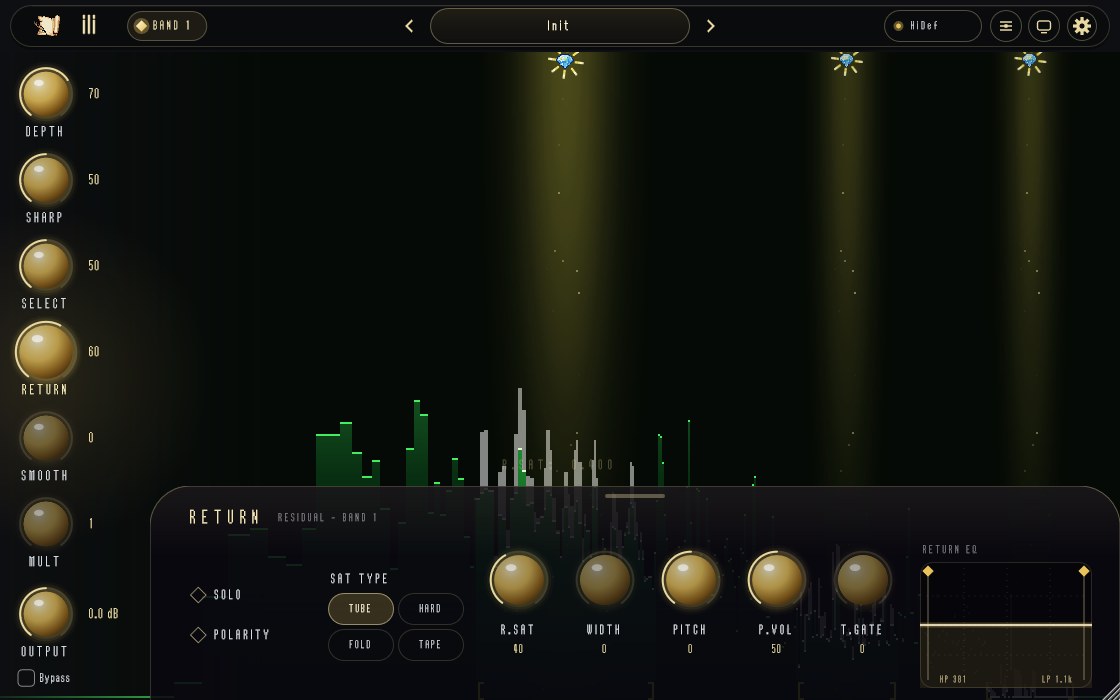
Re-blend what was removed, with saturation, filtering, EQ, width, pitch and a transient gate.
Listen to exactly what ili takes away, and only that.
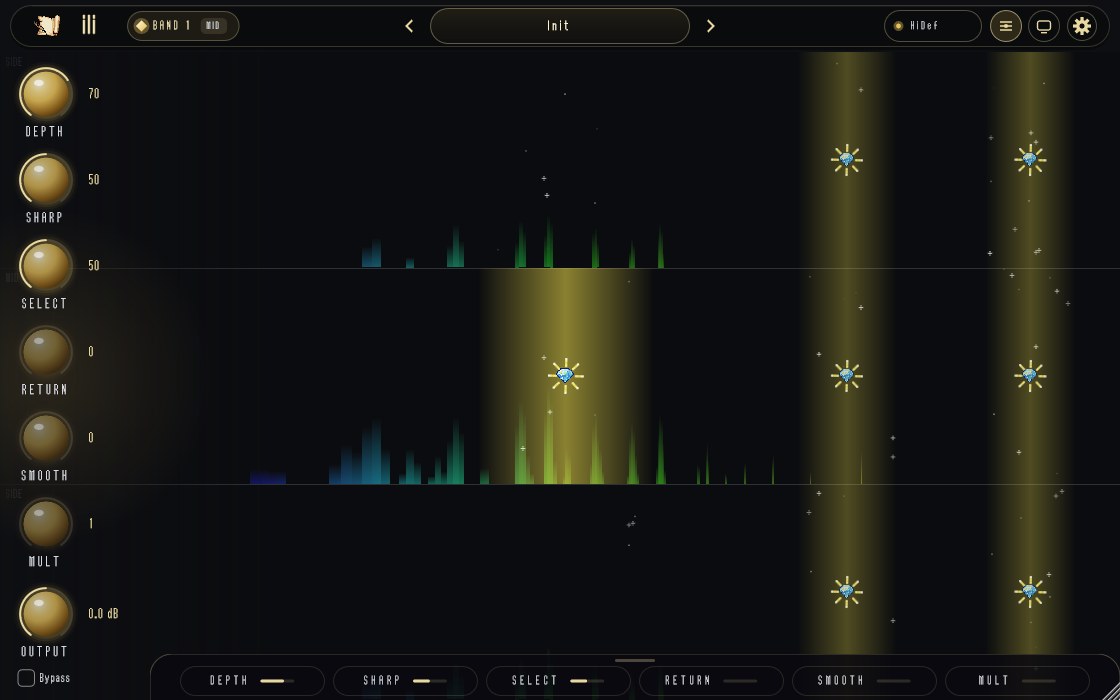
Treat the center and the sides separately, or let another track drive the suppression.
From fast, low-latency tracking to fine high-resolution analysis, plus a two-band Multi mode.
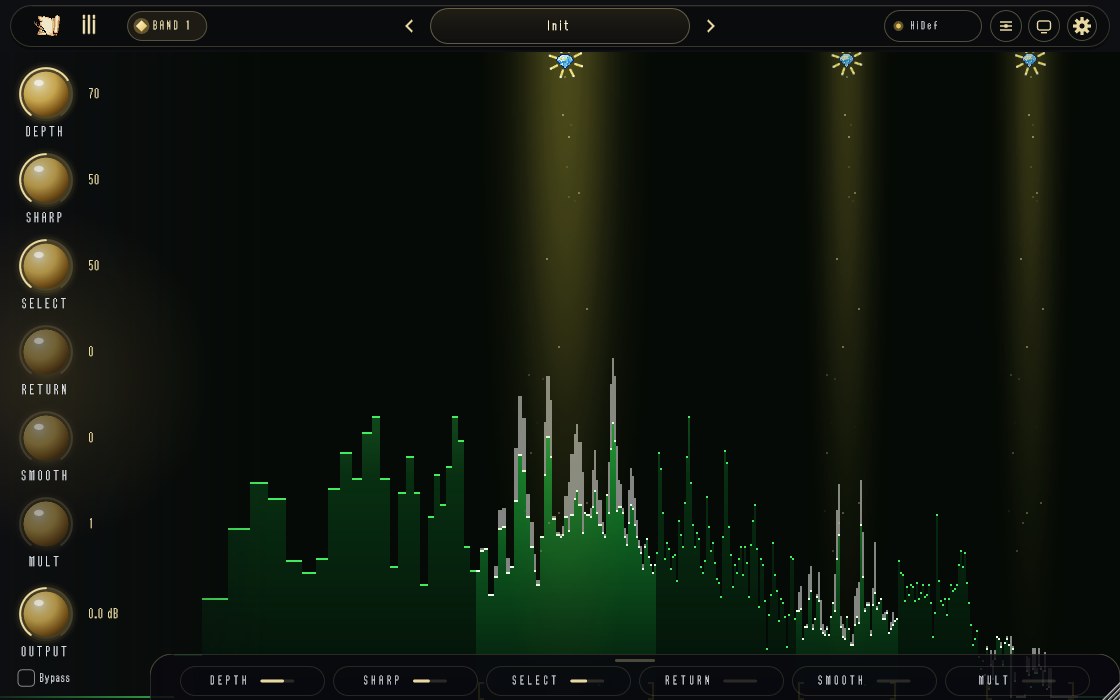
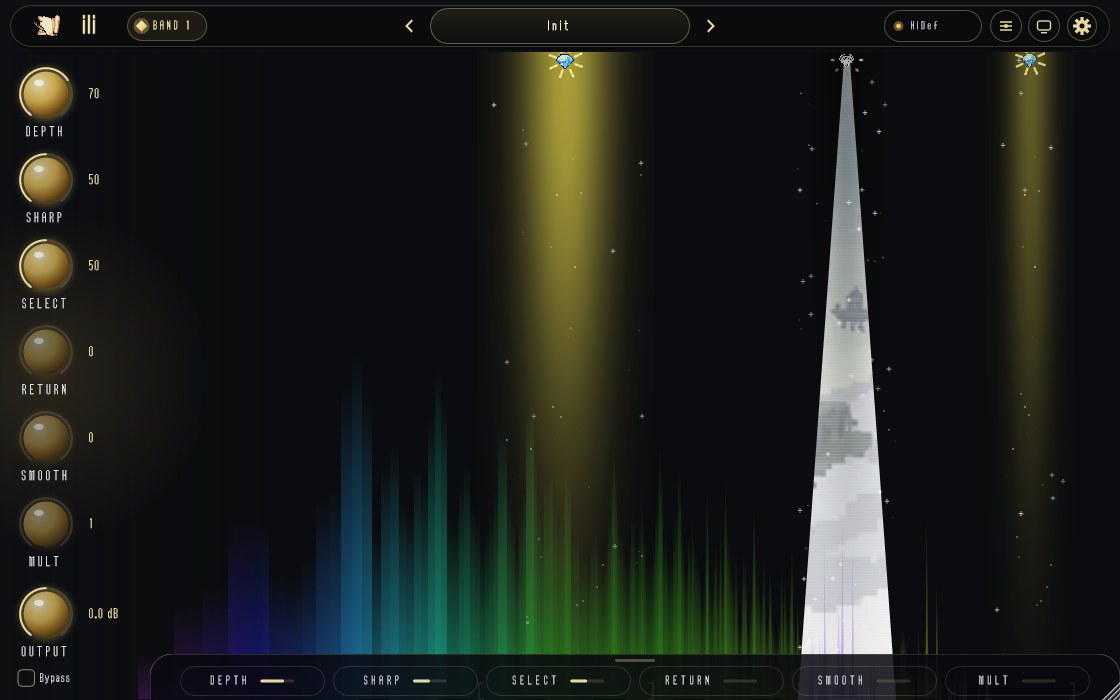
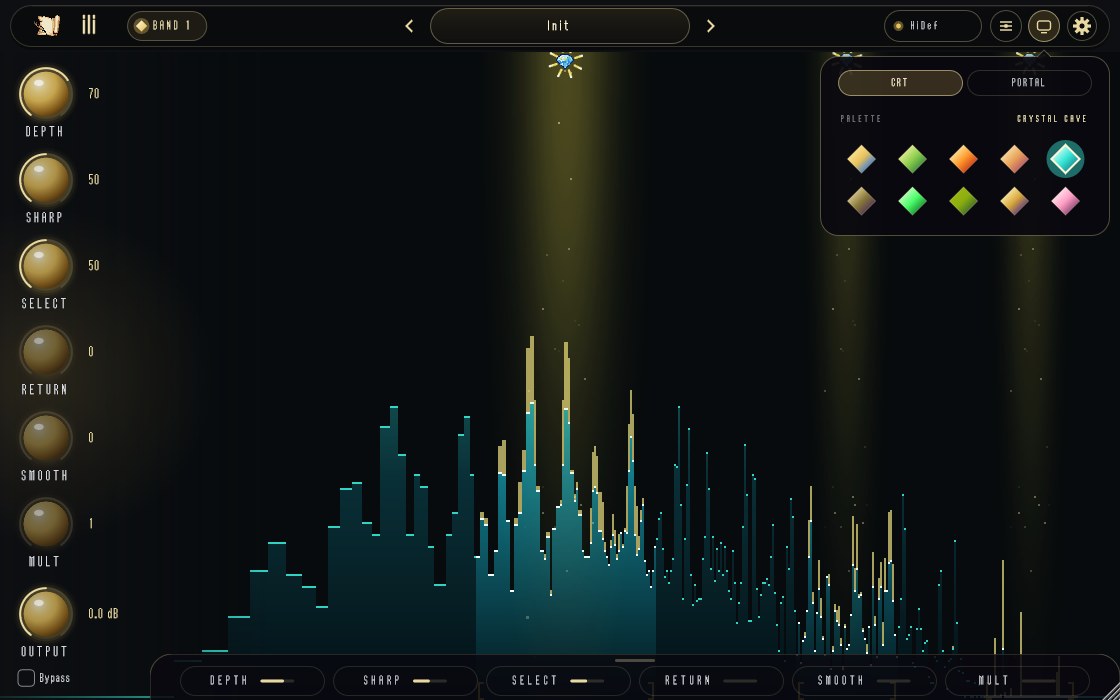
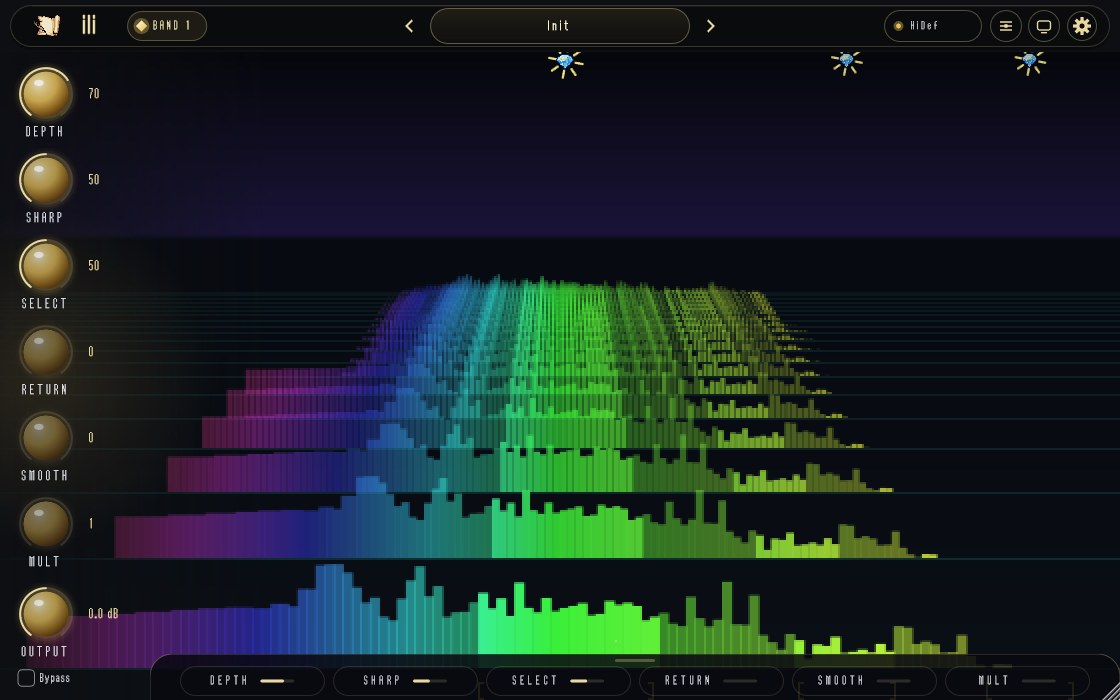
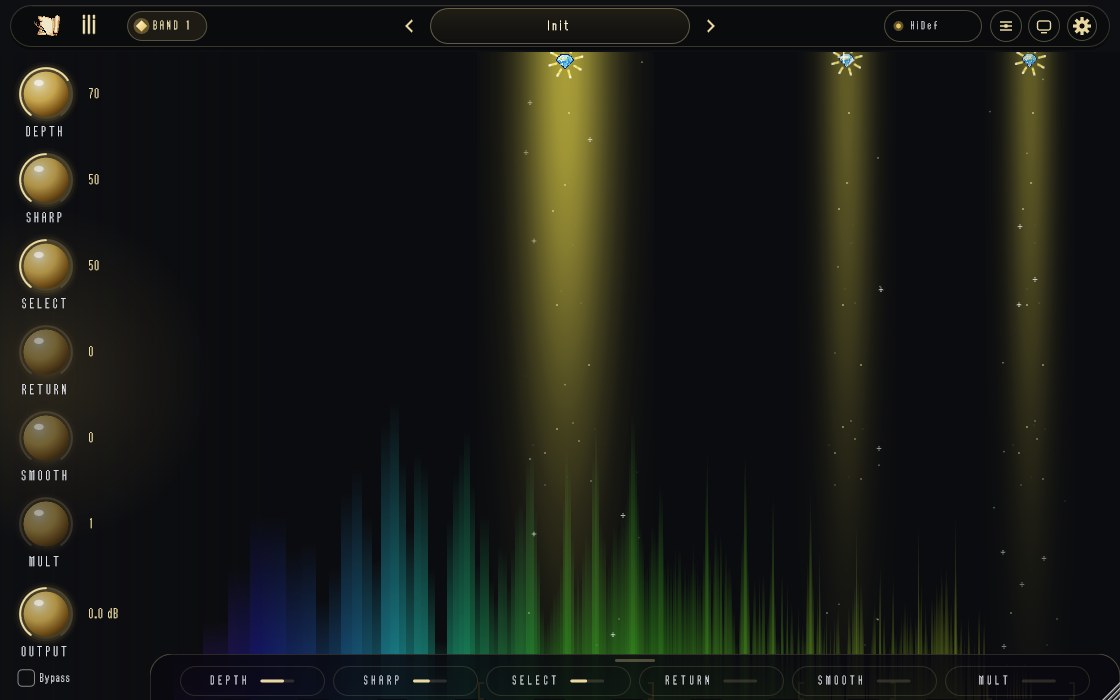
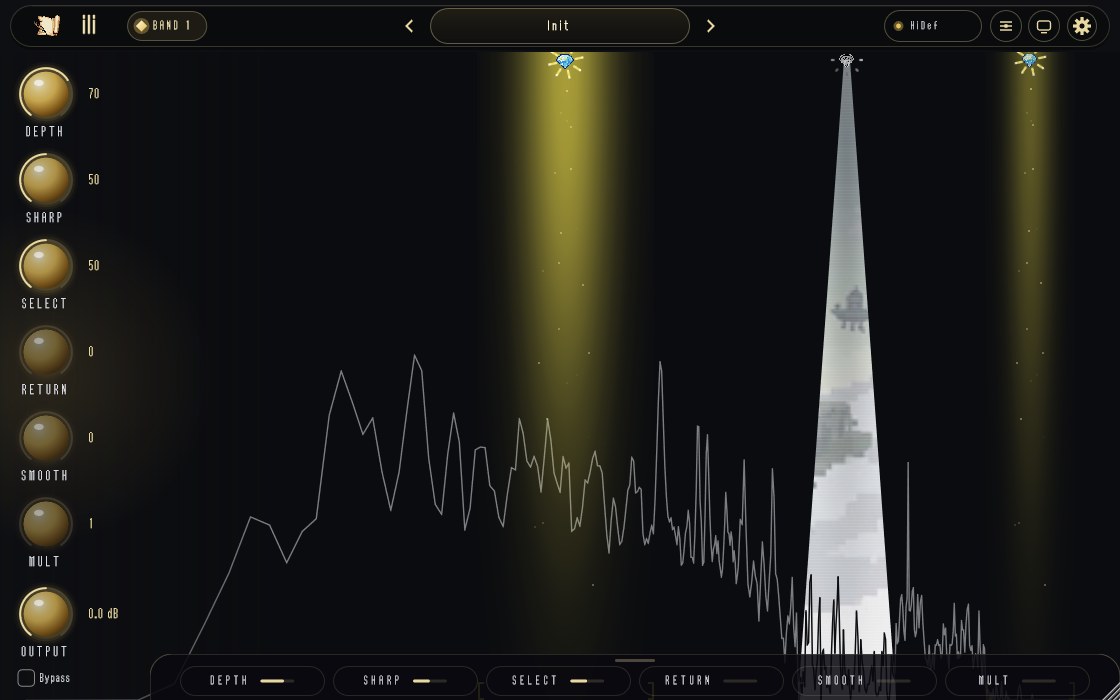

Ten palettes: Gold Ocean, Hyrule Field, Lava Obsidian, Desert Dusk, Crystal Cave, Dark World, Phosphor, Game Boy, Royal and Sakura.
Try ili free for 7 days: download it from your portal and sign in inside the plugin. Own it for $50, once. Gold Supporters get it included.